

The discreet luxury of old money: more than a watch, a vision of the world

In the world of luxury, there's a fine line between showing off and owning. Old money , those who inherit wealth and style through generations, know this difference well. For them, a watch isn't a trophy to be displayed, but a symbol of discretion, culture, and continuity. It's an object that speaks softly, yet with authority. And therein lies its true value.
Style without ostentation: the elegance of the essential
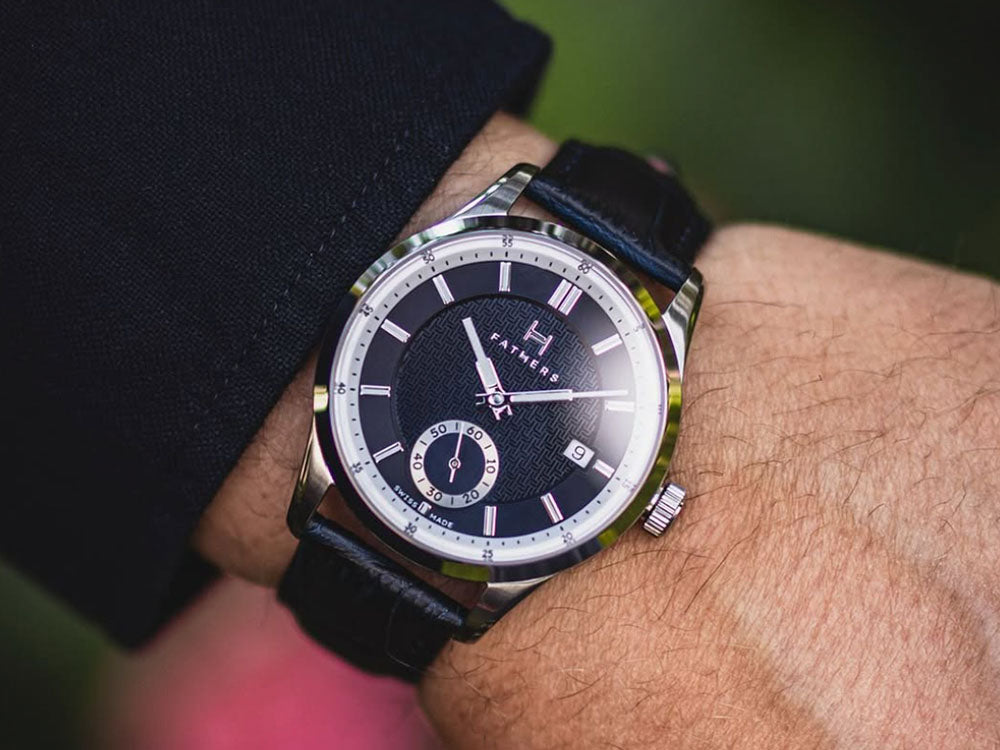
The watches chosen by old money don't shout, they don't shine with effect, but they win you over with their sobriety and coherence . They are often characterized by:
-
Clean dials, with few graphic elements
-
Thin cases, in gold or polished steel
-
Refined but not excessive complications (moon phases, calendar, power reserve)
Elegance lies in moderation, in the choice of a well-aged leather strap, in the silent ticking of a mechanical movement that needs nothing to prove.
Patek Philippe: legacy and discretion
When it comes to old-money watches, Patek Philippe is the first name that comes to mind. Not only for its unparalleled quality, but also for its philosophy: “You never actually own a Patek Philippe. You merely look after it for the next generation.”
A Patek Philippe is a family heirloom , a legacy passed from father to son, or mother to daughter. It's often worn casually, regardless of its commercial value, but with an awareness of its symbolic meaning.
Vacheron Constantin: the purest watchmaking art
Another brand highly prized by old money watchmakers is Vacheron Constantin . Founded in 1755, it is one of the oldest manufacturers in the world. Its creations do not follow trends, but celebrate excellent craftsmanship .
A Vacheron is made for those who appreciate:
-
Hand-decorated movements
-
Enamelled or guilloché dials
-
Sober and sophisticated cases
It's not a watch to impress. It's a watch for those who know.
Jaeger-LeCoultre Reverso: Hidden Refinement
The Jaeger-LeCoultre Reverso is one of the most beloved watches in the old-money world. Created in the 1930s to protect the glass during polo matches, it has become an icon of versatility and design intelligence .
Its flip-up case is the perfect metaphor for old-money style: discreet on the outside, rich in meaning on the inside. Some personalized models feature initials, family crests, or small engravings: a secret luxury revealed only to those authorized to look.
Luxury experienced, not ostentatious
Old money people don't buy a watch to follow a trend, but for continuity, consistency, and peer recognition . A watch is part of everyday life, but also an object charged with memories, a life companion, an element of one's identity.
It doesn't matter the number of complications, the case material, or the price: what matters is what the watch represents , its history, its discreet authority.
Conclusion: in the Fathers' world, time is also a lifestyle
In the Fathers world, where a watch is a conscious choice, not a trend, the old-money style represents a compass of values. It's the choice of those who prefer subtlety to noise, substance to appearance, tradition to ephemerality.
An old-money watch isn't immediately noticeable. But those who recognize it know they're dealing with something rare. And in a fast-paced world, having the right time on your wrist... makes all the difference.