
The secret of Grand Feu enamel dials: between fire, art, and rarity
At the heart of high-end watchmaking lies a technique that combines art, patience, and risk: Grand Feu enamel . Used to create dials of rare beauty, this ancient artisanal practice is today an absolute symbol of mastery and refinement. Each piece is a unique work, created with pinpoint precision and processes that defy time and extreme heat. But what truly makes a Grand Feu enamel dial special? Let's find out.
A name that comes from fire
“Grand Feu” literally means “great fire.” The term describes the process The secret of Grand Feu enamel dials: between fire, art and rarity
At the heart of high-end watchmaking lies a technique that combines art, patience, and risk: Grand Feu enamel . Used to create dials of rare beauty, this ancient artisanal practice is today an absolute symbol of mastery and refinement. Each piece is a unique work, created with pinpoint precision and processes that defy time and extreme heat. But what truly makes a Grand Feu enamel dial special? Let's find out.
A name that comes from fire
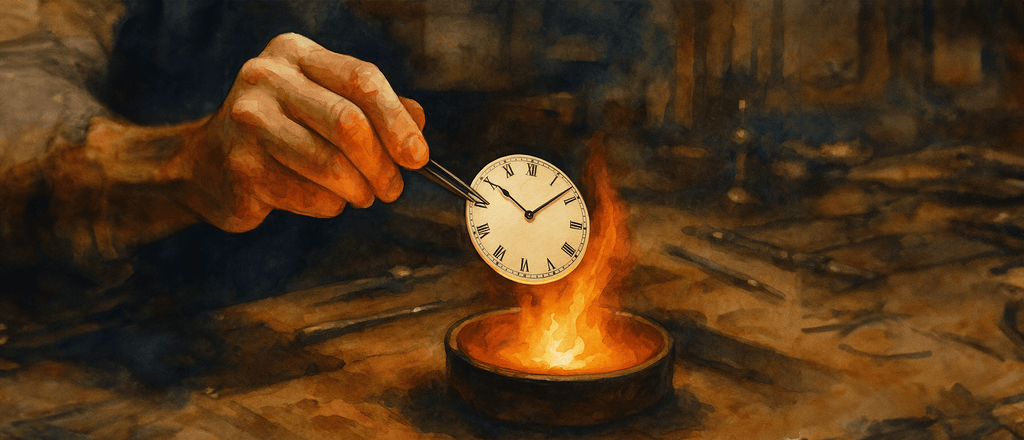
“Grand Feu” literally means “great fire.” The term describes the process of firing the enamel at temperatures exceeding 800°C . Under these conditions, colored glass powder is fused directly onto the surface of the dial, creating a deep, glossy finish that is incredibly durable.
This technique has its roots in 17th-century watchmaking tradition and is still performed strictly by hand by specialized craftsmen. Very few in the world truly master the art of Grand Feu, making it one of the rarest and most valuable techniques in contemporary watchmaking.
Why is it so difficult?
Creating a Grand Feu enamel dial requires:
-
A perfectly smooth metal support (usually gold)
-
The uniform application of the enamel powder
-
Repeated cooking in the oven at very high temperatures
-
Absolute control over the time and temperature of each cooking process
Each step is irreversible . Even the smallest error—a bubble, a crack, a halo—can jeopardize days of work. This is why often only 1 in 10 quadrants survives all stages of the process.
Colors that last forever
One of the most beloved features of Grand Feu enamel is its chromatic stability . The colors do not fade over time, are not affected by light, and do not alter with humidity. After decades (or centuries), they retain the same brilliance as on the first day.
Furthermore, each firing imparts slightly different nuances, making each dial unique . It is the heat that partly determines the final result: a small element of unpredictability that adds charm and authenticity.
The Masters of Enamel: Patek Philippe and Vacheron Constantin
Only a few watchmaking houses still venture into the creation of Grand Feu dials. Among these, the following stand out:
-
Patek Philippe , which has made enamel a stylistic signature, with dedicated collections and models that reach very high peaks in collecting.
-
Vacheron Constantin , which integrates Grand Feu enamels in watches with astronomical complications or with hand-painted miniature decorations.
Owning a watch with a Grand Feu enamel dial means entering an artistic dimension of watchmaking: where technique becomes painting, and time is also measured in beauty.
When art becomes time
A Grand Feu enamel dial isn't designed to dazzle with special effects, but to captivate with its depth, its play of reflections, its imperfect perfection . It's a return to the roots of watchmaking: made of hands, focus, slowness, and patience.
Every time you look at the time, you're also looking at a small masterpiece. A silent work that spans the centuries and lives on your wrist, day after day.
A watch that tells the invisible
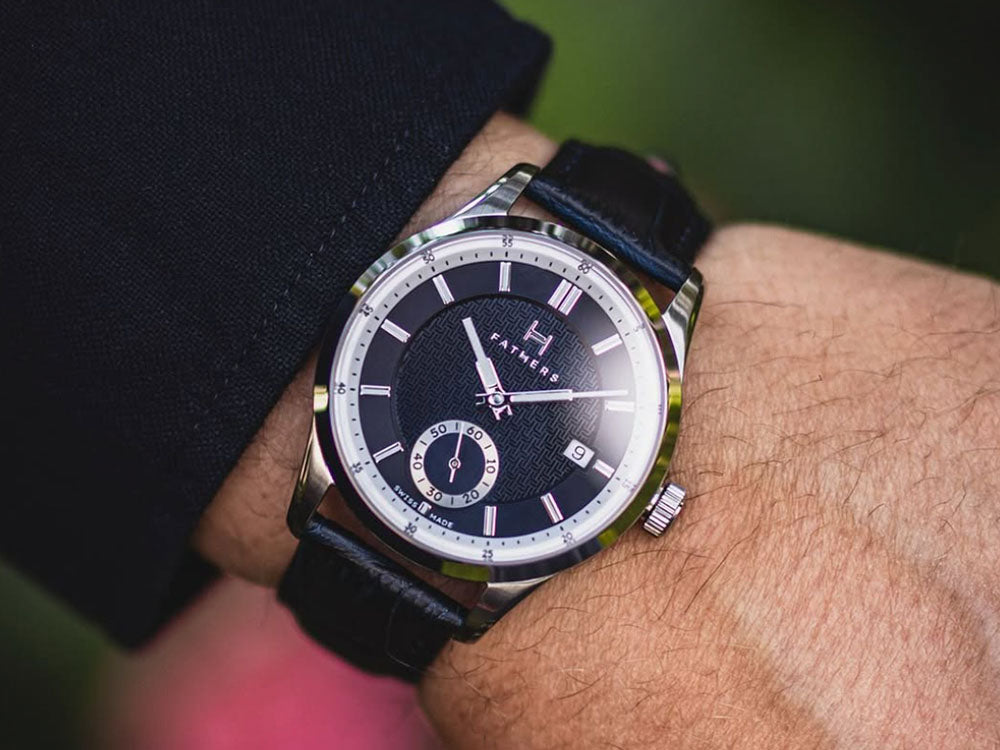
In the Fathers world, watchmaking is not just technique, but expression . Grand Feu enamel represents everything that makes a watch truly special: uniqueness, ancient know-how, respect for the material and the gesture.
A Grand Feu dial is a fragment of eternity. And whoever wears it knows that within that fire there is more than just molten glass, there is also a part of time that never goes out.
enamel firing process at temperatures exceeding 800°C . Under these conditions, colored glass powder is fused directly onto the surface of the dial, resulting in a deep, glossy finish that is incredibly durable.
This technique has its roots in 17th-century watchmaking tradition and is still performed strictly by hand by specialized craftsmen. Very few in the world truly master the art of Grand Feu, making it one of the rarest and most valuable techniques in contemporary watchmaking.
Why is it so difficult?
Creating a Grand Feu enamel dial requires:
-
A perfectly smooth metal support (usually gold)
-
The uniform application of the enamel powder
-
Repeated cooking in the oven at very high temperatures
-
Absolute control over the time and temperature of each cooking process
Each step is irreversible . Even the smallest error—a bubble, a crack, a halo—can jeopardize days of work. This is why often only 1 in 10 quadrants survives all stages of the process.
Colors that last forever
One of the most beloved features of Grand Feu enamel is its chromatic stability . The colors do not fade over time, are not affected by light, and do not alter with humidity. After decades (or centuries), they retain the same brilliance as on the first day.
Furthermore, each firing imparts slightly different nuances, making each dial unique . It is the heat that partly determines the final result: a small element of unpredictability that adds charm and authenticity.
The Masters of Enamel: Patek Philippe and Vacheron Constantin
Only a few watchmaking houses still venture into the creation of Grand Feu dials. Among these, the following stand out:
-
Patek Philippe , which has made enamel a stylistic signature, with dedicated collections and models that reach the highest peaks in collecting.
-
Vacheron Constantin , which integrates Grand Feu enamels in watches with astronomical complications or with hand-painted miniature decorations.
Owning a watch with a Grand Feu enamel dial means entering an artistic dimension of watchmaking: where technique becomes painting, and time is also measured in beauty.
When art becomes time
A Grand Feu enamel dial isn't designed to dazzle with special effects, but to captivate with its depth, its play of reflections, its imperfect perfection . It's a return to the roots of watchmaking: made of hands, focus, slowness, and patience.
Every time you look at the time, you're also looking at a small masterpiece. A silent work that spans the centuries and lives on your wrist, day after day.
Conclusion: a watch that tells the invisible
In the Fathers world, watchmaking is not just technique, but expression . Grand Feu enamel represents everything that makes a watch truly special: uniqueness, ancient know-how, respect for the material and the gesture.
A Grand Feu dial is a fragment of eternity. And whoever wears it knows that within that fire there is more than just molten glass, there is also a part of time that never goes out.