
The world's first watch: who invented it? A story that begins with a countess.
When we think of a wristwatch, we instinctively associate it with masculine elegance, functional accessories, or modern technical masterpieces. Yet, the story of the first wristwatch is surprisingly different from what one might imagine. It begins in 1868, in an aristocratic context, with a name that is still synonymous with excellence today: Patek Philippe .
1868: the first wristwatch, for a woman, is born
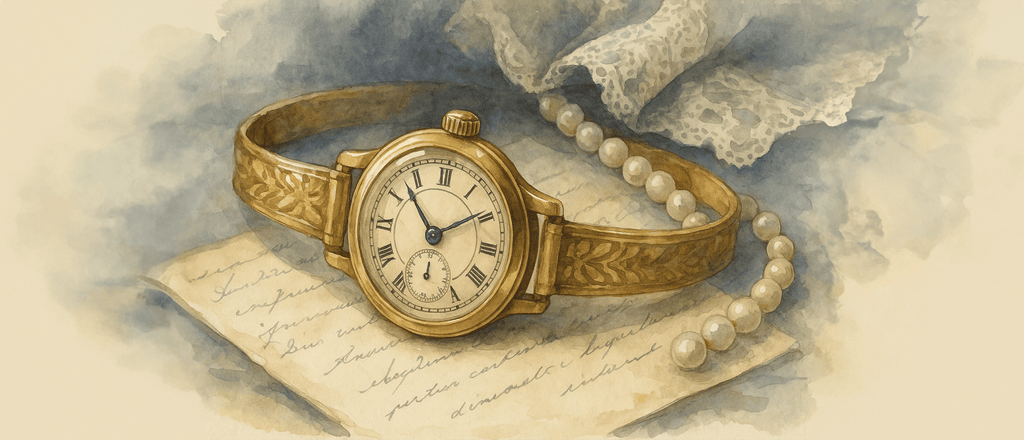
It was precisely this prestigious Genevan maison that commissioned the first wristwatch in history . The recipient? The Hungarian Countess Koscowicz of Geneva . A jewel designed more for beauty and prestige than for practicality. Crafted in gold, with an integrated bracelet and elegant decorations, this timepiece was more akin to a fine jewelry bracelet than a precision instrument.
At the time, the pocket watch was still the standard for men. Wristwatches were considered exclusively feminine objects , useful for adorning the wrist and completing sophisticated outfits.
From war to revolution: the wristwatch becomes universal
It wasn't until the outbreak of World War I that the wristwatch began to become widespread among men. Soldiers needed convenient and quick tools for reference during operations. Pocket watches were impractical in the trenches and on the battlefield.
In this context, the so-called "trench watches" were born : pocket watches adapted with leather straps, metal guards, and luminescent dials. This military necessity accelerated the adoption of the wristwatch as a standard for men as well, transforming it from a frivolous object to an indispensable tool .
Who really revolutionized the concept of the wristwatch?
If Patek Philippe can be credited with inventing the first documented wristwatch , it is Louis Cartier who defined its modern identity. In the early 1900s, Cartier created an elegant and functional wristwatch for aviator Alberto Santos-Dumont , which became the famous Santos de Cartier .
That model marked a turning point: a wristwatch created specifically for men, designed to fly, to be worn, to be lived in. Elegance and utility in a single object. From then on, the wristwatch was no longer a niche accessory.
From utility to symbolism
Over the course of the twentieth century, the wristwatch took on increasingly profound meanings . From a simple measuring instrument it became:
-
Sign of status and personal taste
-
Family legacy to pass down
-
Object of technological innovation
-
Creative platform for art and design
Today, whether it is an ultra-technological timepiece, a vintage military watch or a classic manufacturing piece, the wristwatch represents an identity choice .
Conclusion: an object created for a countess, which has become a universal icon
In the world of Fathers, where every watch tells a story, it's fascinating to think that it all began with a gesture of style and grace, intended for a woman of high society.
The first wristwatch wasn't meant to be revolutionary, yet it was. Because sometimes, it's precisely in elegant details and unexpected choices that true revolutions are born.
And so, from an aristocratic gift to an instrument of war, to becoming a symbol of elegance and character, the wristwatch has made its way through history… always remaining on the wrist of those who have something to say.