




The Exact Time and the Atomic Clock
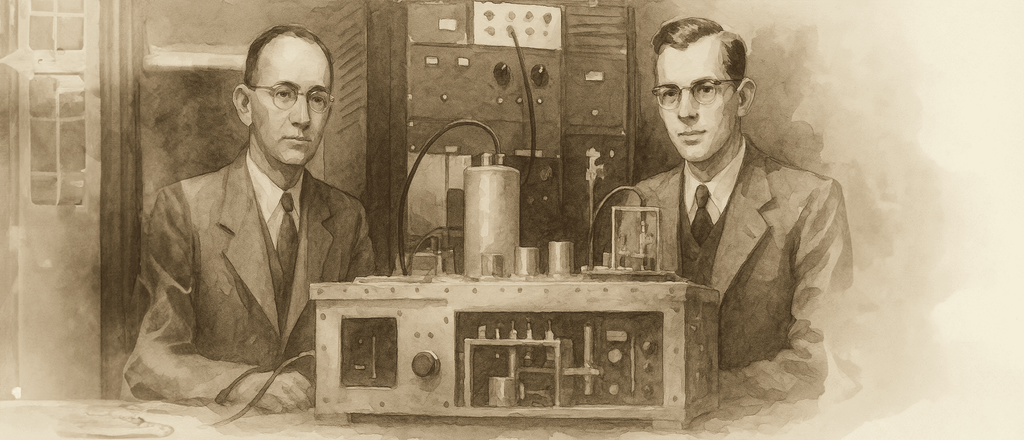
Exact Time and the Atomic Clock: The World's Most Precise Timekeeping Device
When we talk about When it comes to precision timekeeping , no instrument comes close to perfection like the atomic clock . These incredible devices represent the pinnacle of timekeeping, providing a level of accuracy essential to many modern technologies, such as GPS, global communications, and even network synchronization. But what exactly is an atomic clock, how does it work, and why is it so accurate at determining the exact time ? In this article, we'll explore how atomic clocks work, their importance, and how they're used to keep official time worldwide.
What is an Atomic Clock?
A atomic clock It is a device that measures time based on atomic oscillations, specifically those of atoms of elements such as cesium or strontium. Unlike mechanical or electronic clocks, which rely on physical motion or electrical impulses, atomic clocks use energy transitions within atoms. These changes in state occur at an extremely constant rate, making them perfect for precise timekeeping.
How Does an Atomic Clock Work?
The most common atomic clock uses atoms of cesium-133 . It works by exploiting the frequency of the oscillations of these atoms when they are exposed to a certain amount of energy. According to the In the International System of Units (SI) , one second is defined as the duration of 9,192,631,770 oscillations of the caesium-133 atom. This number of oscillations is extremely stable and predictable, allowing for near-perfect precision.
Operation Process:
- Energy generation : Cesium atoms are hit by microwaves, inducing a change in their energy states.
- Transition Detection : When the applied energy exactly matches the natural oscillation frequency of the atom, a state transition occurs.
- Control Feedback : A control system monitors these oscillations and uses them to adjust and synchronize the clock.
These steps allow atomic clocks to keep extremely precise time, with a variation of less than a second every millions of years .
The Importance of the Atomic Clock
Atomic clocks are essential to numerous fields of technology and science. Some of the most critical uses include:
- GPS : The Global Positioning System (GPS) relies on the extremely precise time synchronization provided by atomic clocks to precisely calculate a device's position on Earth. Even a small error in time measurement can result in a discrepancy of kilometers in the position calculation.
- Telecommunications : Telecommunications networks use atomic clocks to synchronize data globally. Transmitting signals between satellites and Earth requires extraordinary timekeeping precision to avoid delays or data loss.
- Finance : Global financial transactions, such as those conducted in stock markets, rely on precise timing to accurately record the exact moment of each trade.
- Science and Research : High-level scientific experiments, especially those related to quantum physics and astronomy, require extremely accurate time measurements.
The Most Accurate Atomic Clocks in the World
Atomic clocks, although extremely precise, are constantly evolving. In addition to cesium clocks, other types of atomic clocks use different atoms, such as strontium or ytterbium , to further improve accuracy.
- NIST-F2 : One of the most advanced atomic clocks in the world is the NIST-F2 , developed by the National Institute of Standards and Technology (NIST) in the United States. This watch uses cesium and can maintain accuracy so that it will not lose or gain a second in 300 million years .
- Strontium Atomic Clock : The The JILA Strontium Atomic Clock , developed at the JILA Institute in Colorado, is considered the most precise clock currently in existence. It uses strontium atoms and is capable of maintaining such high precision that it could lose less than a second in 15 billion years old , far exceeding the age of the universe itself!
Coordinated Universal Time (UTC) and the Atomic Clock
The Coordinated Universal Time (UTC) , the reference time zone for the world, is based on atomic clocks. More than 400 atomic clocks around the world are used to calculate the coordinated universal time , which is governed by the Bureau International des Poids et Mesures (BIPM) . UTC is the official time on which all global time zones are based, and its synchronization depends entirely on atomic clocks.
Differences between Solar Time and Atomic Time
One of the most interesting aspects of using atomic clocks is the comparison with solar time. Traditionally, time was measured by observing the Earth's motion around the Sun, but the Earth's rotation is not perfectly constant. Atomic clocks, however, are so precise that they can detect tiny variations in the planet's rotation speed. When these discrepancies become significant, the leap second (leap second), an additional second that is occasionally inserted to keep atomic time aligned with solar time.
How Exact Time Is Measured
For most people, the exact time It is provided by electronic devices connected to the Internet, which synchronize the time with servers that use atomic clocks as a reference. Many websites and services offer the ability to display the exact time, such as the NIST website or the website time.is , which synchronize directly with these extremely precise clocks.
Atomic Clocks in the Future
Scientists continue to work to further improve the accuracy of atomic clocks. Future advances in physics and technology could lead to the creation of even more precise clocks, using new types of atoms or even technologies based on quantum phenomena.
An innovative example is represented by the Optical clocks , which use light to measure time and promise to be much more accurate than traditional atomic clocks. These clocks could open new frontiers in science, enabling experiments and discoveries in areas such as general relativity and particle physics.
Conclusion
Atomic clocks are essential tools to ensure the time measurement The most precise clock ever achieved by man. With applications ranging from satellite navigation to global network synchronization to advanced scientific experiments, these clocks allow us to keep track of time with unprecedented accuracy. If today we can know the exact time in every part of the world, we owe it to the extraordinary technology of atomic clocks.