



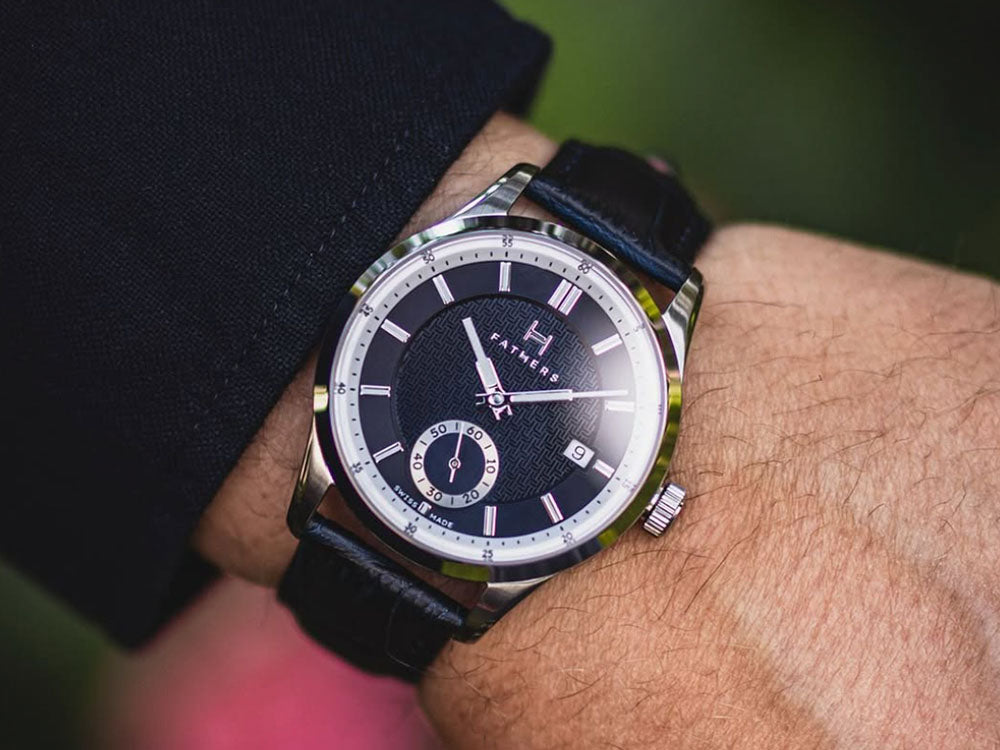
The story of the first automatic watch
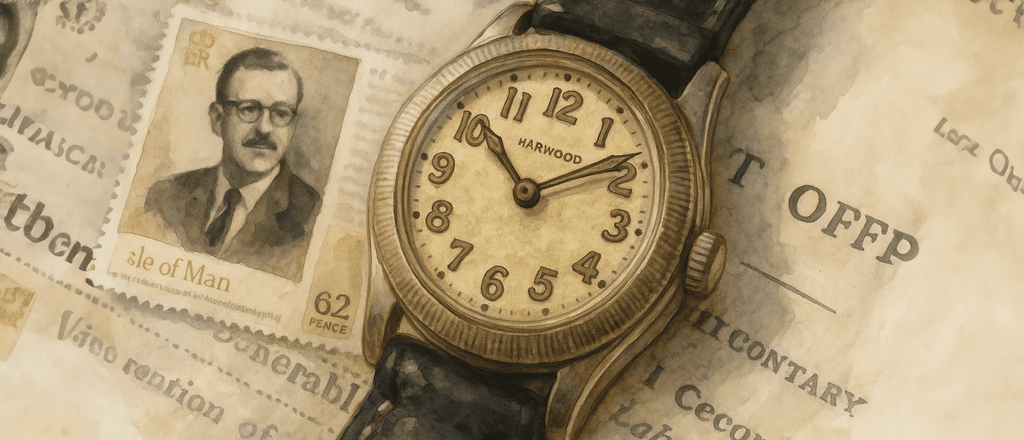
The history of the first automatic watch is fascinating and full of innovations. This article will explore how the first automatic watch was born and how it changed the world of watchmaking. From its invention to modern models, we'll see how this type of watch revolutionized timekeeping.
What is an automatic watch?
An automatic watch is a type of mechanical watch that doesn't require a battery. It's powered by the movement of your wrist. When you move your arm, an internal mechanism rewinds the mainspring. This process allows the watch to run without a battery. Automatic watches are also known as self-winding watches.
These watches are prized for their precision and their ability to operate without batteries. Their invention marked a major leap forward in watchmaking technology. The story of the first automatic watch is a tale of ingenuity and innovation.
The birth of the automatic watch
Mechanical watches before the automatic
Before the automatic watch, only manually wound mechanical watches existed. These watches had to be wound regularly by turning the crown. The problem was that if the watch wasn't wound, it would stop. This system was practical but had its limitations.
Manually wound mechanical watches were already very advanced. However, they weren't perfect. Watchmakers were looking for a way to make the watch more convenient and practical. The idea was to eliminate the need to wind the watch manually.
The invention of the first automatic watch
The invention of the first automatic watch dates back to 1923. The watch was created by John Harwood , a British watchmaker engineer. His invention was a watch that wound itself automatically by the movement of the wrist. This was a major breakthrough in watchmaking.
Harwood designed a mechanism that used an oscillating rotor. This rotor moved with the movement of the arm and transferred energy to the mainspring. This innovative system made the watch more practical and easier to use. It was the first time a watch could be wound without manual winding.
The success of the first automatic watch
Harwood's automatic watch was well received by the public. This type of watch represented a major innovation compared to existing models. People appreciated the convenience of not having to wind the watch manually. The idea of having a self-winding watch was revolutionary.
Over the years, many other manufacturers began producing automatic watches. The success of the Harwood model demonstrated the demand for this type of watch. People were ready to adopt new technologies that simplified their daily lives.
Technical details of the first automatic watch
The rotor mechanism
The heart of the first automatic watch was the rotor mechanism. This component was essential to its function. The rotor is a small lever that moves with the movement of the wrist. This movement winds a spring inside the watch.
The rotor is connected to a gear system that transfers energy to the mainspring. This system allows the watch to run even when not manually wound. The precision of the mechanism has been one of the strengths of the automatic watch.
Improvements over the years
Since the invention of the automatic watch, many improvements have been made. Watchmakers have refined the rotor mechanism and added new features. These improvements have increased the accuracy and reliability of automatic watches.
Innovations include the use of better materials and more advanced manufacturing techniques. Furthermore, automatic watches have become more durable and long-lasting. These improvements have helped make automatic watches more popular and widespread.
The impact of the automatic watch
Revolution in the world of watchmaking
The invention of the automatic watch was a true revolution. It changed the way people thought about watches and timekeeping. Automatic watches introduced a new level of convenience and precision.
The ability to have a self-winding watch made automatic watches much more attractive. People could finally say goodbye to manual winding. This change has profoundly influenced watch design and production over the years.
The spread of the automatic watch
Over time, the automatic watch spread throughout the world. Many manufacturers began producing automatic watches, making them available to a wide range of customers. This led to increased competition and continuous innovation in the industry.
Automatic watches have become a symbol of quality and precision. People appreciate their reliability and elegant design. Today, automatic watches are considered a luxury choice, and many watch enthusiasts collect them.
Modern automatic watches
Technological advances
Modern automatic watches have benefited from numerous technological advances. The mechanisms have become more precise and durable. The materials used are also of higher quality, increasing the watches' strength and durability.
Today, automatic watches can include a variety of additional functions. Some models offer date displays, extended power reserves, and other advanced features. These improvements have made automatic watches even more versatile and practical.
The automatic watch as a status symbol
In the modern world, automatic watches are often seen as a status symbol. High-end models are crafted from premium materials and offer sophisticated designs. Owning a luxury automatic watch is considered a sign of success and sophistication.
Many prestigious brands produce automatic watches that are true works of art. These watches are prized not only for their precision, but also for their design and craftsmanship. Luxury automatic watches are often collected as investment pieces and status symbols.
Conclusion
The story of the first automatic watch is one of innovation and progress. From John Harwood's invention in 1923 to the emergence of modern automatic watches, the changes have been remarkable. The automatic watch revolutionized the world of timekeeping, offering a practical and reliable alternative to hand-wound watches.
Today, automatic watches continue to be prized for their precision and elegant design. They have become a symbol of luxury and refinement, and their popularity is only set to grow. The story of the first automatic watch demonstrates how technological innovation can change the way we experience and perceive time.