
How to Choose an Automatic Watch: 7 Criteria Before You Buy
You never forget your first automatic watch: neither the right one, nor the wrong one. And the difference between the two, almost always, comes down not to price but to the questions you failed to ask before buying. Here they are, in order: seven concrete criteria for choosing an automatic watch without regretting it, valid for any brand, from the microbrand to the great maison.
1. The movement: what kind of heart beats inside the case?
The movement is the watch: everything else is just clothing. For an automatic, there are three essential checks. First, the origin and reputation of the calibre: a widely used movement with proven reliability (like the Swiss Made automatic calibres fitted to every Fathers watch, starting with the Sellita SW200-1 in the divers) can be serviced anywhere, today and twenty years from now. Second, the power reserve: it tells you how long the watch keeps running when not worn; the SW200-1, for example, is rated at 42 hours. Third, work out whether an automatic really is for you: if you're torn between automatic and manual winding, we've dedicated a specific article to the comparison.
2. Diameter and proportions: the right case for your wrist
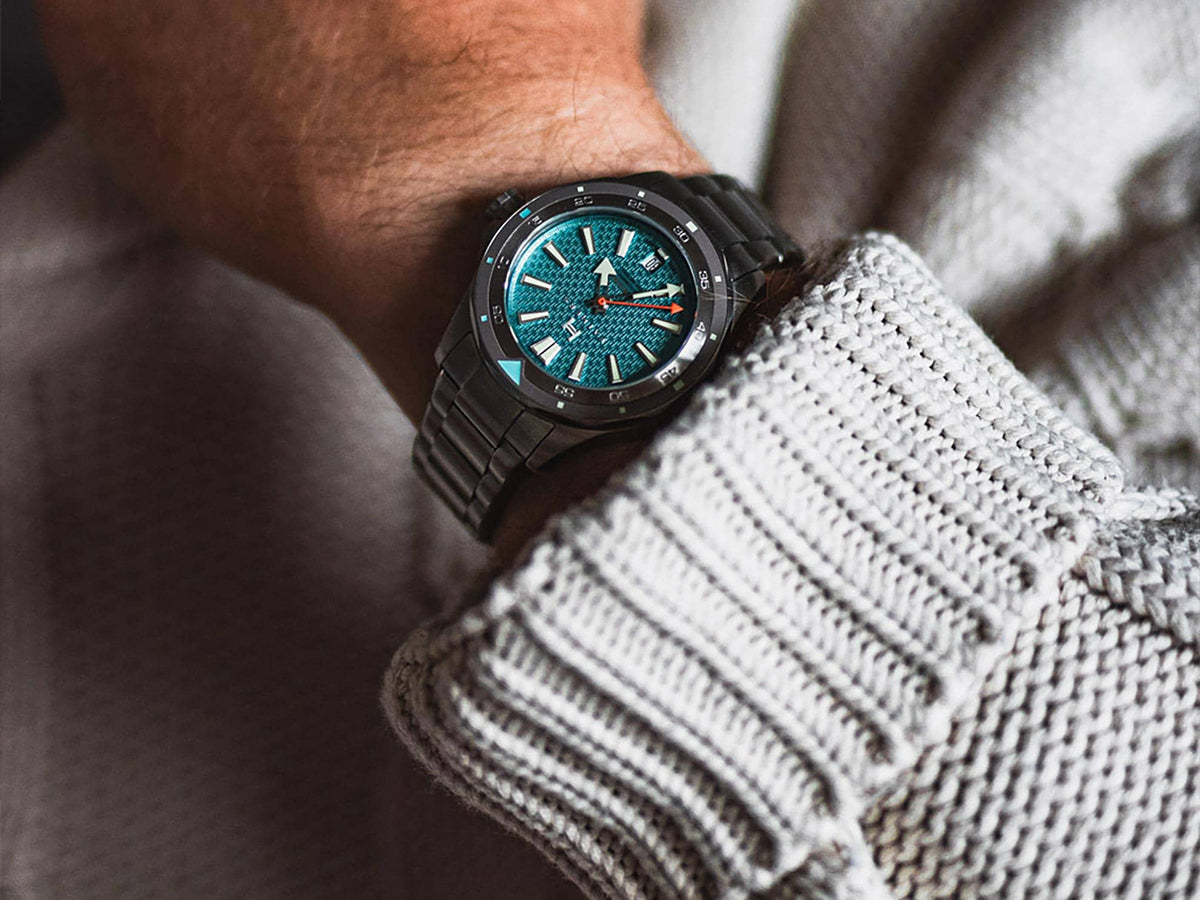
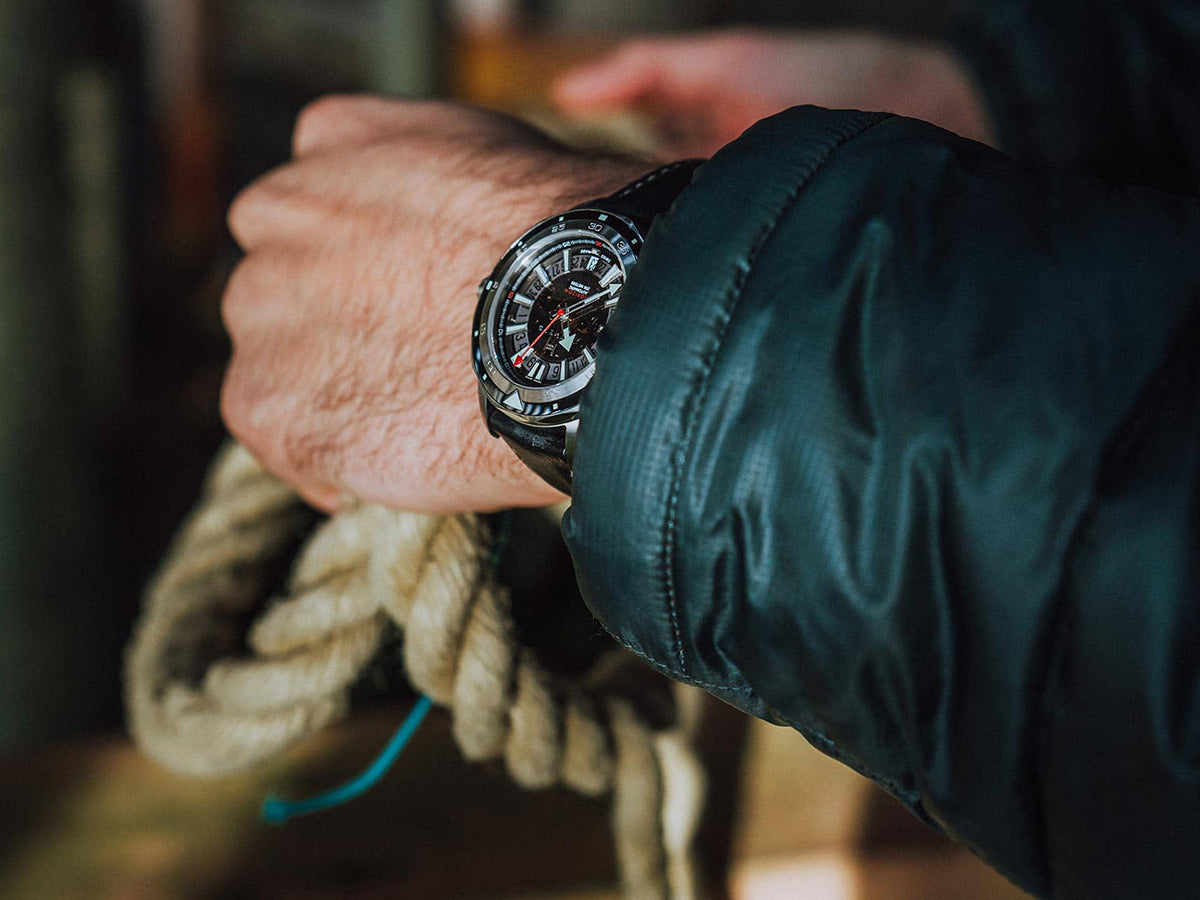
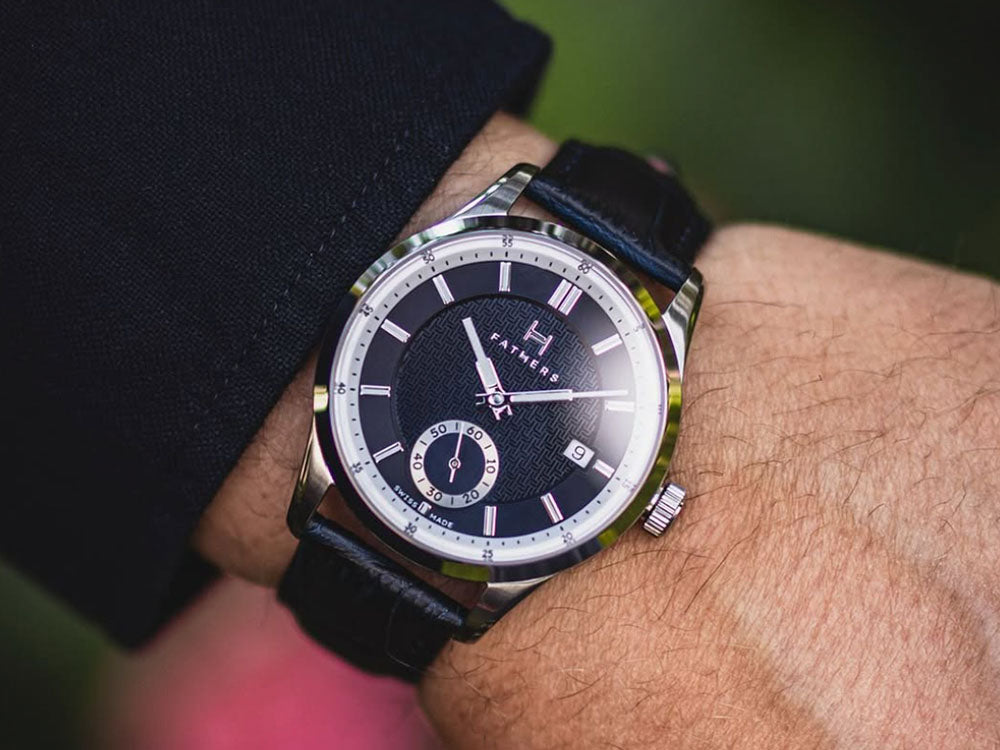
The single most common mistake: buying the watch you saw in a photo, not the one that suits your own wrist. Measurements matter more than looks: a 40 mm is today the benchmark for most men's wrists, while a 38 mm flatters medium-to-small wrists and anyone after a discreet profile. Don't stop at the diameter: thickness decides how it wears too (a Fathers diver like the Eternal Legacy is rated at 11.9 mm, a measurement that slips under a cuff). In the Fathers catalogue the choice is clear-cut: 40 mm for divers and GMT, 38 mm for the Small Seconds Always line, designed precisely for those who love classic proportions.
3. The crystal: sapphire, and little else
Above a certain price bracket, sapphire crystal is non-negotiable: its hardness makes it virtually impossible to scratch in real-world use, and it's the reason a quality watch stays legible and beautiful for decades. Look for an anti-reflective treatment too, which eliminates glare and keeps the dial readable in any light. Every Fathers watch, from the EUR 1,310 diver to the EUR 930 Small Seconds, is fitted with sapphire crystal and an anti-reflective coating: it's a catalogue standard, not an optional extra.
4. Water resistance: how much do you actually need?
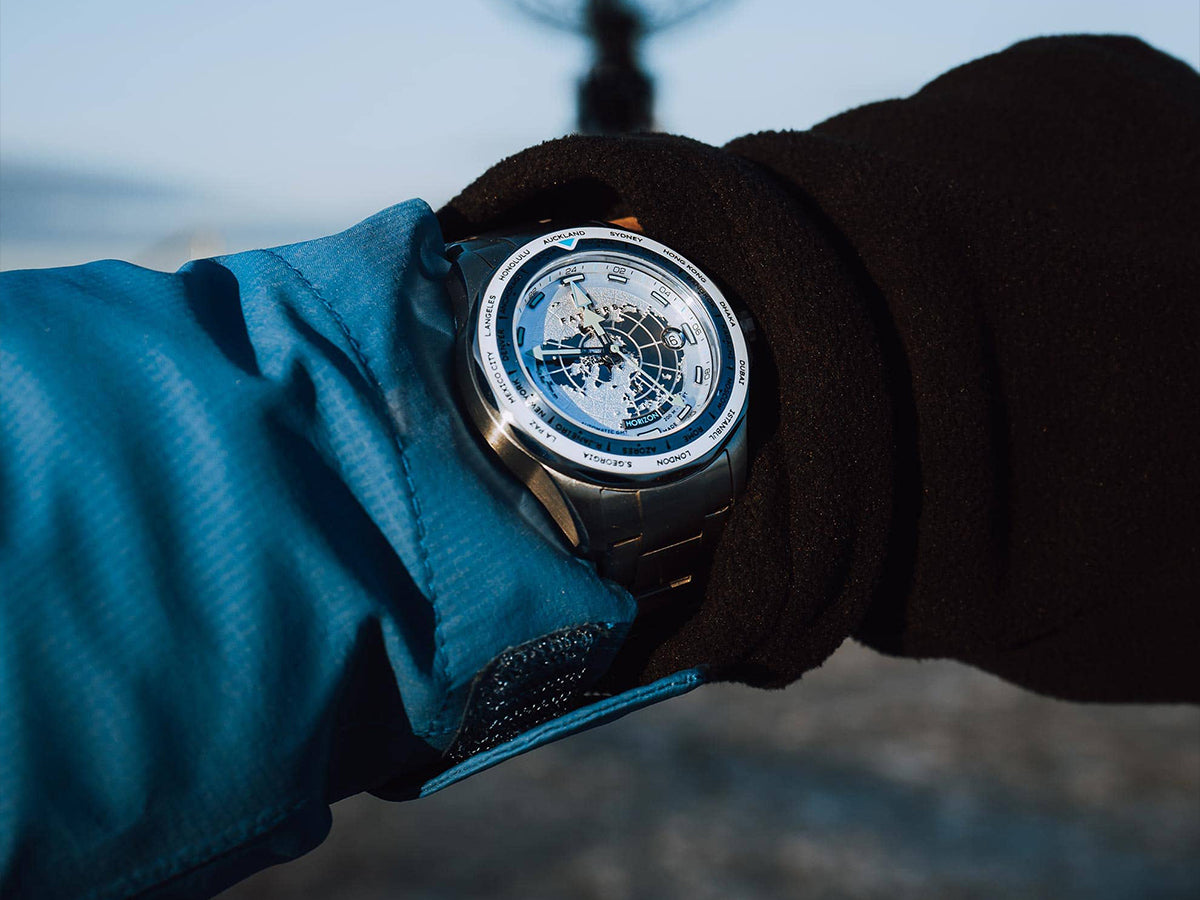
Here you need to be honest with yourself. If the watch will live between the office, travel and the odd swim, water resistance of 100 m / 10 ATM (like that of the Small Seconds Always line) is more than adequate. If you're after a companion for the sea, water sports and diving, aim for the 200 m / 20 ATM of the true divers, such as the Horizon and Evolution lines or the GMT Globetrotter. The rule of thumb: better a little extra margin than a watch you have to take off every time you go near water. And remember that water resistance isn't forever: it has to be maintained through periodic checks of the gaskets.
5. The warranty: how much does the maker believe in it?
The warranty is the most underrated technical spec of them all, and it's the one that tells you how much the maker trusts their own watch. The industry standard generally hovers around two years. Always read what it covers: the movement? The water resistance? Assembly defects? On this point, Fathers has taken a clear stance: a 5-year warranty on every watch (The Fathers Promise), covering manufacturing defects, movement malfunctions, mechanical adjustment and assembly. In the world of independent watchmaking it's a rarity, and it's a selection criterion in its own right.
6. After-sales service: what happens once you've bought it?
An automatic is a long-term relationship: sooner or later it will need a check, an adjustment, a service. Before you buy, ask yourself: who will take care of it? How does the watch get sent in for service? At what shipping costs and with what turnaround? The Fathers service includes collection, inspection, servicing and return within the terms of the warranty: the watch is picked up and returned, without you having to track down an authorised centre. For an online purchase, this single item is worth as much as a technical spec.
7. Value over time: would you buy it again in ten years?
The last criterion is the most personal. A well-chosen automatic watch doesn't lose meaning with the years: it accumulates it. What counts is the design (trends pass, classic proportions endure), the brand's story, the availability of spare parts and, for those with an eye on material value too, the production run: the limited, numerically contained series of the microbrands speak of a real scarcity, not a manufactured one. But the real test is another: is it a watch you can picture giving away one day? If the answer is yes, you've found the right one. A model like the Fathers Procida, dedicated to the fishermen's island in the Gulf of Naples, is born with exactly this ambition: to be a piece of Italy to wear on your wrist and, one day, to pass on.
Where to begin
Seven criteria may seem like a lot, but they boil down to a single question: will this watch be able to stay with me for decades, both mechanically and emotionally? If you want to apply them to real cases, the full catalogue is the right place to start: you'll find all the Fathers watches with specifications declared model by model, from the 200 m divers to the 38 mm Small Seconds Always collection. Compare, measure your wrist, read the spec sheets: the right watch stands up to every question on this list.
Frequently asked questions
Is an automatic watch accurate?
A quality automatic is accurate by mechanical standards: a small daily deviation is natural and part of the nature of an object that runs without batteries. If accuracy drops noticeably over time, it's a sign that an adjustment or a service is needed, routine operations for any good watchmaker.
Do I have to wind my automatic every day?
No, not if you wear it: the oscillating weight winds it through the movements of your wrist. When not worn, the watch runs for the duration of the power reserve (42 hours on the Sellita SW200-1 in the Fathers divers), after which you just put it back on your wrist or give the crown a few turns and set the time.
What diameter should I choose for a small wrist?
For medium-to-small wrists, a 38 mm is generally the most balanced choice: presence on the wrist without excess. It's the diameter of the Fathers Small Seconds Always collection, expressly designed for slim wrists and for anyone who prefers a discreet profile. In any case, whenever possible, try the watch on or measure your wrist circumference before buying.
Is it worth buying an automatic from a microbrand?
If the specifications are transparent and the after-sales service is solid, yes: microbrands often offer technical equipment above the average of their price bracket, along with limited production runs and a strong identity. The criteria in this guide count double: check the movement, materials, warranty and service, and choose makers who put everything down in black and white.