
Automatic Swiss Made Dive Watches Under EUR 1,500: What to Really Look For
Between EUR 1,000 and EUR 1,500 something interesting happens in the dive watch market: it's the bracket where independent microbrands take on the big groups, offering higher-category specifications to those who know how to read them. But it's also the bracket where marketing words carry as much weight as spec sheets. This guide is here to tell the two apart: what an automatic Swiss Made dive watch under EUR 1,500 must truly have, and where to look before you pay.
What does "Swiss Made" really mean?
Let's start with the most abused label in watchmaking. "Swiss Made" is not a slogan: it's a designation regulated by Swiss law, which requires, among other things, a Swiss movement and that a majority share of the production value be generated in Switzerland. In practice: a Swiss Made diver in this price bracket almost always houses a proven, reliable Swiss mechanical calibre, and this is the first reason it costs more than an equivalent with an Asian movement. It isn't necessarily always the right choice for everyone; what is certain, though, is that whoever pays for Swiss Made should know what they are paying for.
Water resistance: do 100 or 200 metres really make a difference?
Yes, and not for the metres themselves. Water resistance ratings refer to static laboratory pressures: 100 m corresponds to 10 ATM, 200 m to 20 ATM. In real-world use, a WR 100 m happily handles swimming and water sports; WR 200 m is the reference standard for a true diver, because it guarantees margin even when diving with tanks and, above all, speaks to a more serious construction: a better-protected crown, more robust gaskets, and cases engineered for pressure.
On this point Fathers has made a clear choice: every diver in the brand's range, both the Diver Horizon line and the Diver Evolution line, is rated at 200 m / 20 ATM of water resistance. No models that are "divers in name only".
The bezel: unidirectional, 120 clicks, and the material matters
The rotating bezel is the tool that gives a diver its purpose: it measures elapsed time, whether underwater or above it. Three things to check. First: it must be unidirectional, meaning it can only turn counter-clockwise; if knocked, it can only reduce the remaining time shown, never increase it. It's a matter of safety, not style. Second: the number of clicks. A 120-click bezel allows half-minute adjustments and is a mark of carefully engineered mechanics. Third: the material of the insert. Aluminium, common in this bracket, scratches and fades; ceramic keeps its colour and finish over the years and, until recently, was the preserve of higher price brackets.
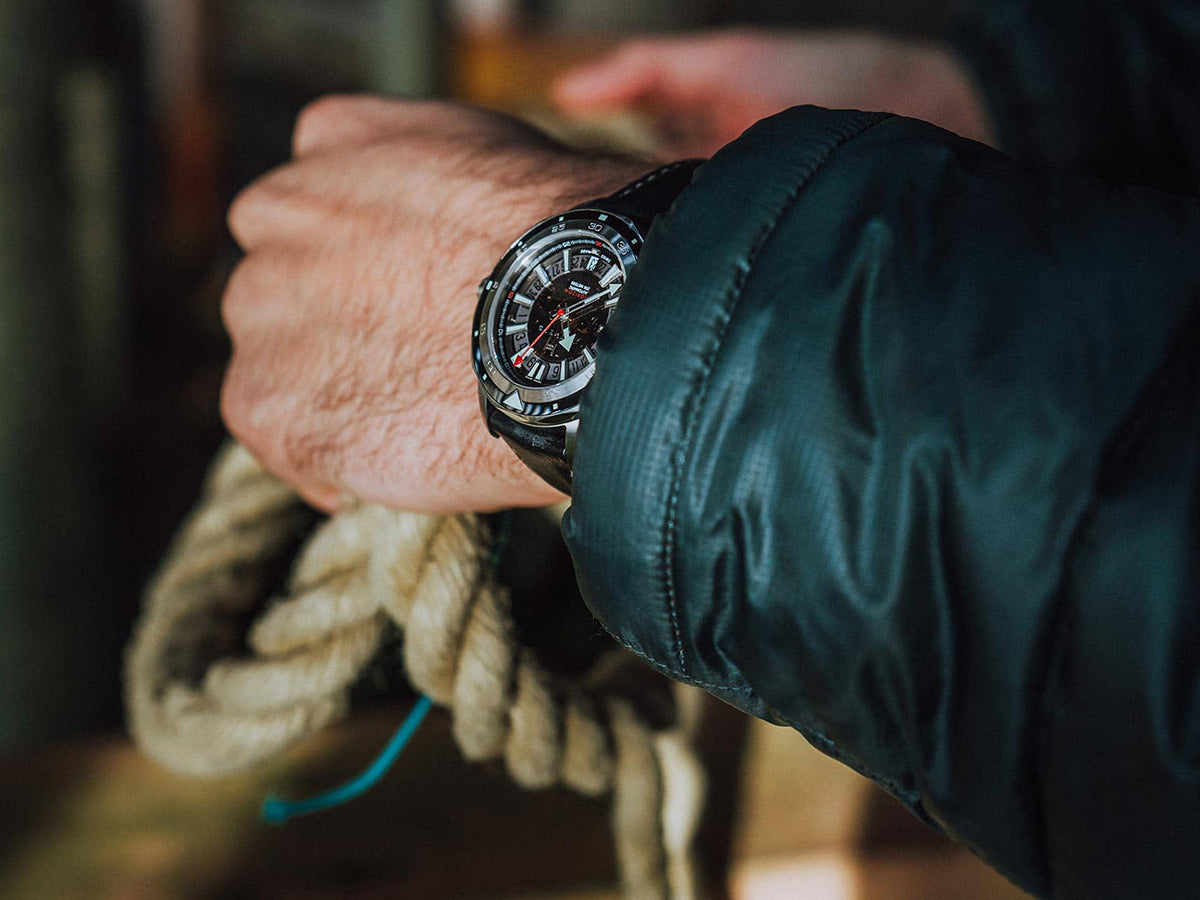
Fathers divers feature a unidirectional 120-click ceramic bezel with a registered design: a specification well worth comparing, at the same price, with what the rest of the market offers.
The crystal: why sapphire is non-negotiable
Under EUR 500, mineral glass is an acceptable compromise. Above EUR 1,000, it isn't: sapphire crystal is the standard you should demand, because its hardness makes it practically immune to everyday scratches. Check also for anti-reflective treatment: on a diver, immediate legibility is part of the function, and a crystal that reflects is a crystal that hides the time. Every Horizon and Evolution diver features sapphire crystal with an anti-reflective coating. If you want to dig deeper into the differences between sapphire, mineral and acrylic, we've written a dedicated guide.
The movement: what to expect in this price bracket
In the automatic diver market the general rule is simple: below EUR 700-800, reliable Japanese calibres dominate; in the Swiss Made bracket between EUR 1,000 and EUR 1,500 the standard is widely used Swiss calibres — robust, accurate and serviceable by any competent watchmaker. It's not a contest for the most exotic movement: in this bracket, a widespread calibre is an asset, because it means available spare parts and straightforward servicing for decades.
The Fathers Horizon and Evolution feature the Sellita SW200-1, a Swiss Made automatic with a 42-hour power reserve: one of the most proven movements in contemporary watchmaking, chosen precisely for its reliability and ease of maintenance. Rounding out the technical package, Super-LumiNova C3 SLN treatment on the indices and hands for nighttime legibility: on a diver, seeing the time in the dark is not an extra.
Where Fathers watches sit, honestly
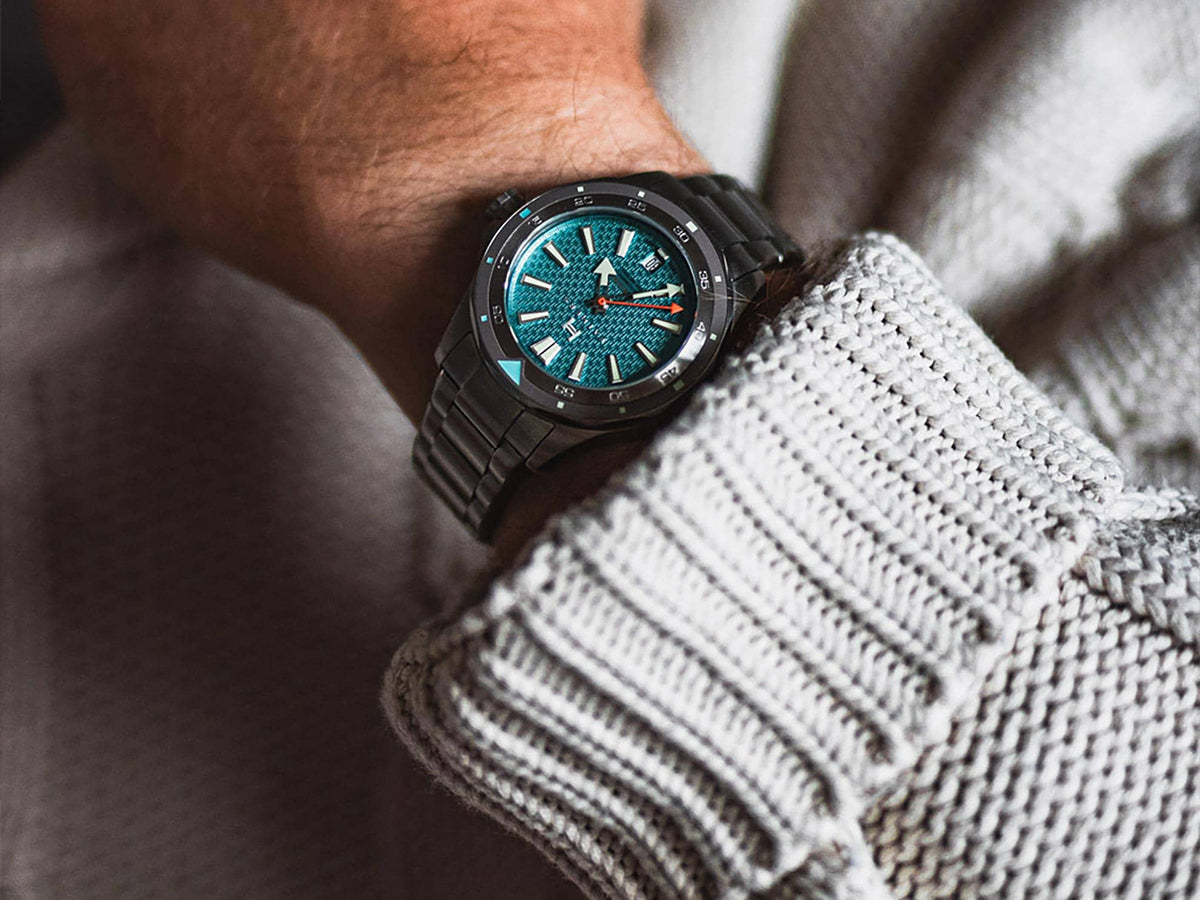
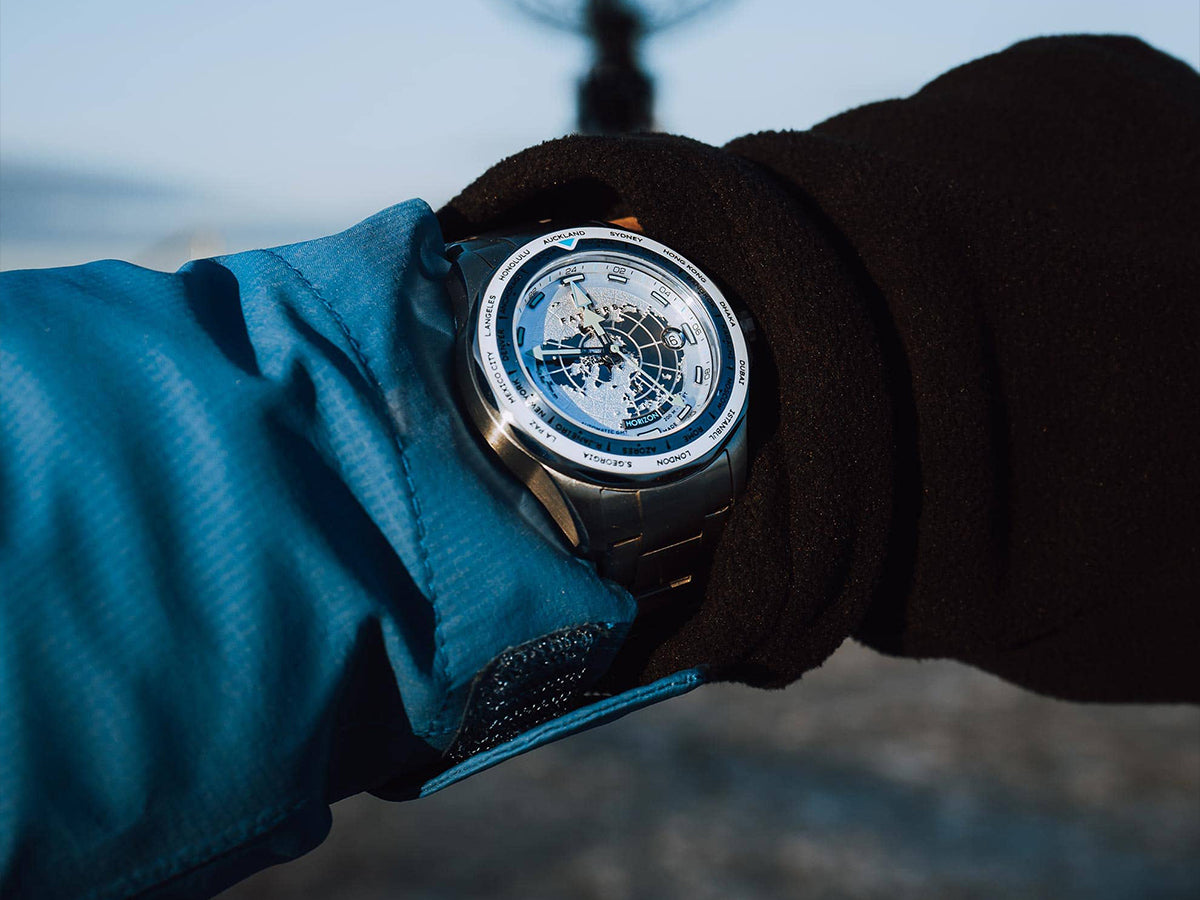
Let's put the cards on the table. The Diver Horizon line (8 models, EUR 1,310) is the Fathers diver by definition: a 40 mm 316L steel case, Sellita SW200-1, unidirectional 120-click ceramic bezel, anti-reflective sapphire crystal, Super-LumiNova C3 SLN, 200 m of water resistance. A model like the Eternal Legacy even states a thickness of 11.9 mm: slim for a 200 m diver, and comfortable under a shirt cuff too. The Diver Evolution line (4 models, EUR 1,380) shares the same technical base and takes the brand's philosophy one level higher: more refined finishes and stronger personalities, from the absolute black of the Black Hole to the fiery red of the Antares.
In this price bracket the competition is serious, and it must be said: there are microbrands and long-established names offering excellent divers, some with specific certifications, others with in-house movements at aggressive prices. What a Neapolitan microbrand can bring to the table, beyond the spec sheet, is what large-scale production doesn't replicate: numerically limited runs, an Italian identity designed in Naples with Swiss Made production, and a 5-year warranty (The Fathers Promise) with collection and return included, where the industry standard generally stops at two. Compare the specs, always: it's exactly the comparison these spec sheets don't fear.
Frequently asked questions
Can I dive with a watch water resistant to 200 metres?
Yes: 200 m / 20 ATM is the reference standard for recreational scuba diving, as well as for swimming, free diving and water sports. Remember, though, that water resistance must be maintained: keep the crown fully closed and have the gaskets checked periodically.
What's the difference between Diver Horizon and Diver Evolution?
The technical base is the same: Sellita SW200-1, 40 mm 316L steel, 120-click ceramic bezel, anti-reflective sapphire crystal, 200 m of water resistance. The Evolution (EUR 1,380) stands out for more refined finishes and a bolder aesthetic; the Horizon (EUR 1,310) offers the widest range, with 8 different dials.
Is a diver also suitable for everyday office use?
Absolutely: it's the reason for its success. Its robustness, legibility and water resistance make it a worry-free watch, and a 40 mm diameter with a slim profile sits neatly under a shirt cuff. With a leather strap, a diver changes register in thirty seconds.
Why does a Swiss Made diver cost more than a Japanese one?
Mainly because of the movement and the requirements of the Swiss Made designation, which mandates that production value be generated in Switzerland. On top of this, model by model, come materials such as ceramic and sapphire and the small production volumes typical of microbrands. It's not automatically "better": it's a choice of philosophy, longevity and servicing.