
The Watch to Pass Down: Why an Automatic Is an Inheritance, Not a Purchase
There is a moment, in many families, when a watch changes wrists. It happens at a graduation, beside a crib, the evening before an important departure. No one plans it, and yet when it happens everyone understands the same thing: you are not passing along an object, you are passing along time. Time accumulated, safeguarded, shared. This is why a mechanical watch is not bought the way you buy a phone. It is chosen the way you choose something that is meant to outlive you and to tell whoever comes after us who we were.
In this guide we look at why the automatic watch, in particular, is the natural candidate to become a family inheritance, what technical qualities it truly needs to travel across generations, and how to care for it in the meantime.
Why can an automatic watch last for generations?
The answer lies in its very nature: an automatic is an entirely mechanical machine. No battery to replace, no electronic circuit that will one day go out of production and leave the watch beyond repair. Inside the case, a mainspring, a train of wheels and an oscillating weight that rewinds the movement with every motion of the wrist all work together. And anything mechanical can be disassembled, cleaned, lubricated and reassembled: this is the profound difference between an object that grows old and an object that wears out.
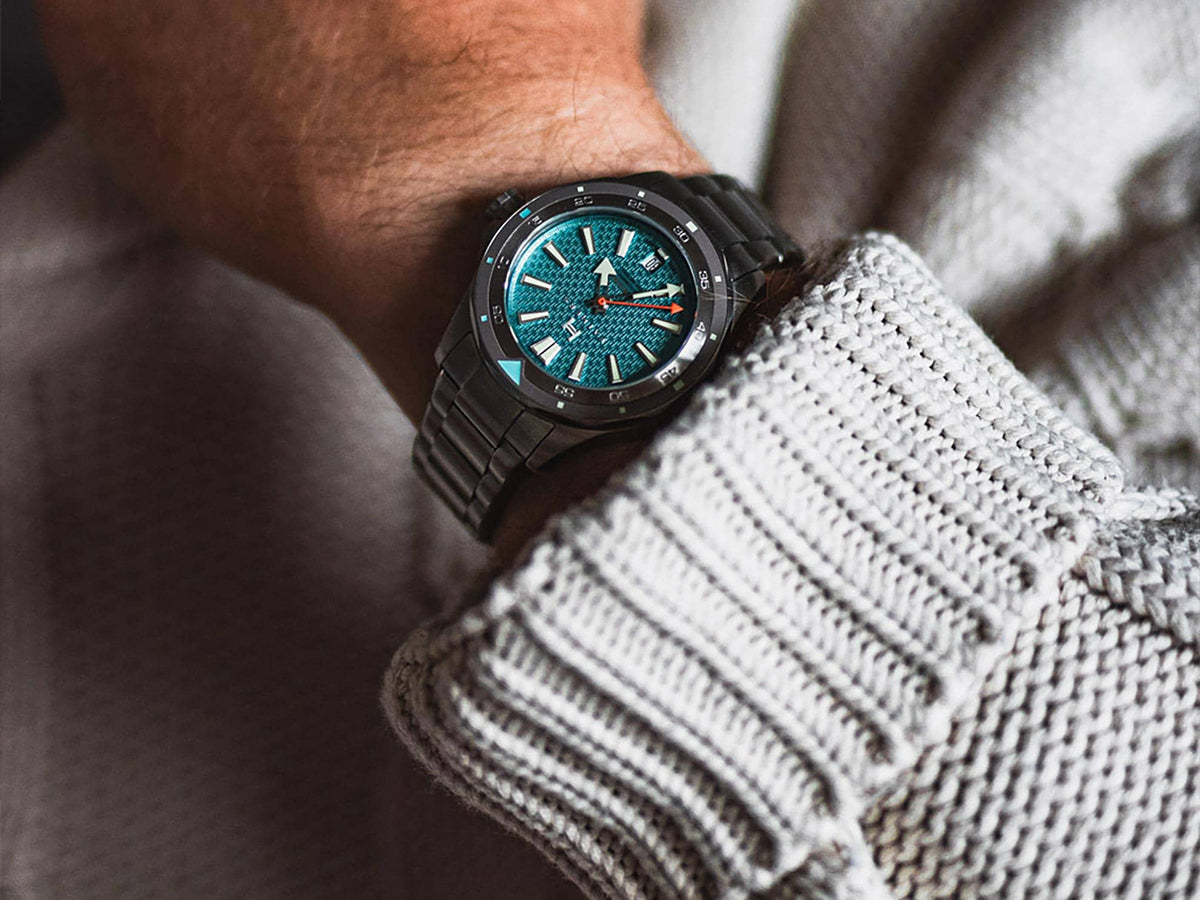
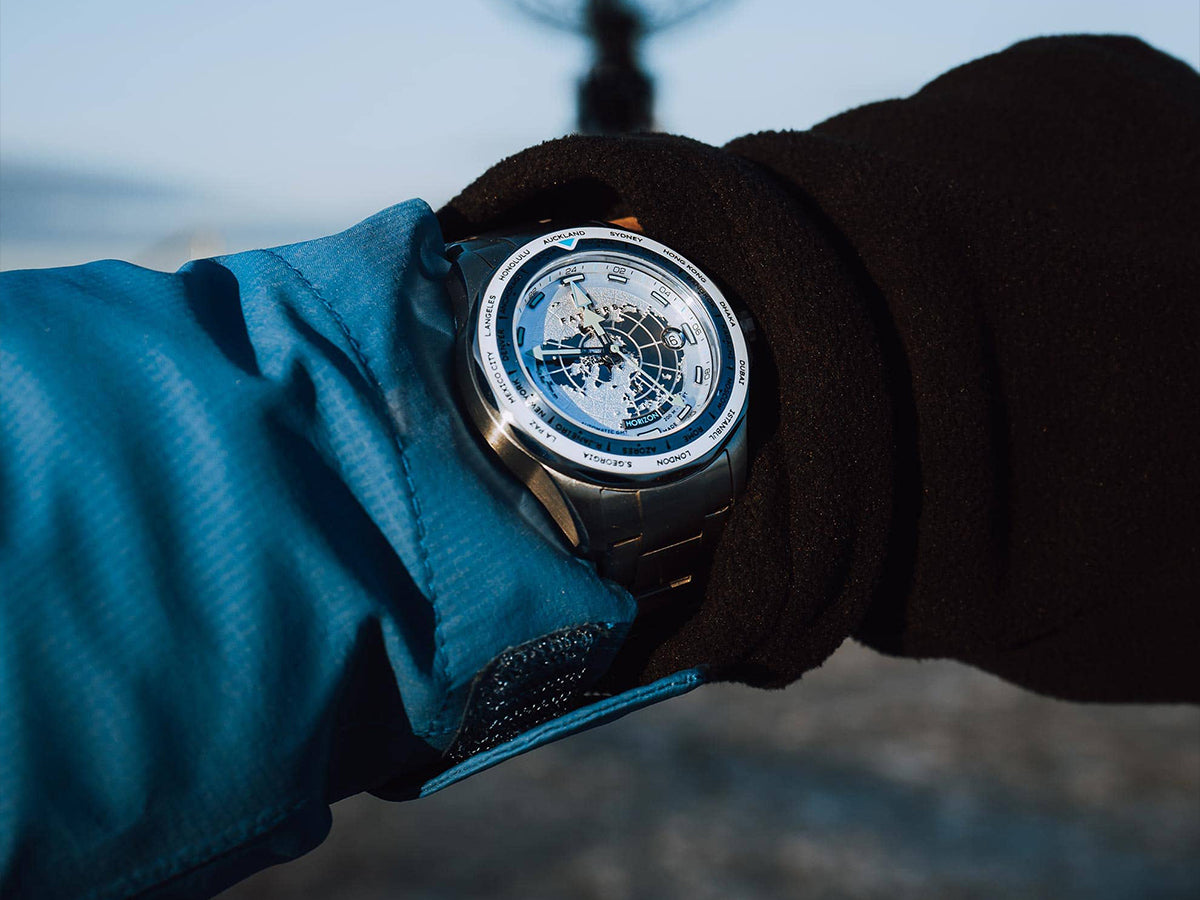
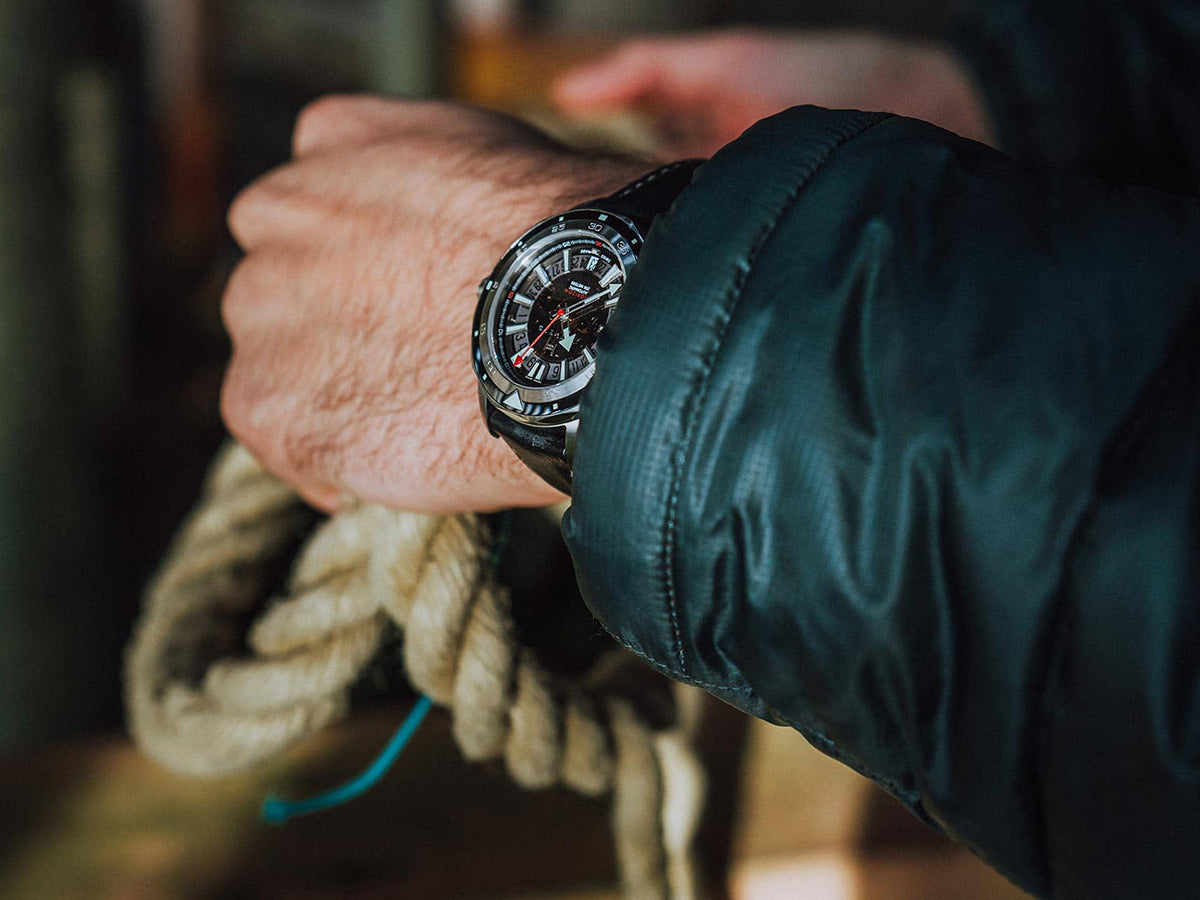
What matters, though, is also which movement beats inside the case. The Fathers divers, for example, are fitted with the Sellita SW200-1 calibre, a Swiss Made automatic with a 42-hour power reserve: a widespread, well-documented movement that any good watchmaker knows and can service. Thirty years from now, whoever inherits that watch will not have to hunt for an impossible-to-find spare part: they will simply need to take it to someone who does the job well. If you want to understand better how the mechanics on your wrist actually work, we explained it all in this lesson in time.
What makes a watch suited to being passed down?
Not every watch is born to last. Four elements separate an ordinary purchase from a future inheritance.
A repairable mechanical movement
This is the non-negotiable requirement. A quartz movement depends on electronic components with an industrial life cycle; a widely diffused mechanical movement, such as the Swiss Made automatic calibres, is serviced today just as it will be serviced decades from now. The watch to pass down is, first and foremost, a watch that can always be repaired.
Materials that age well
The 316L steel case, the same used on every Fathers watch, is the standard of serious watchmaking: it withstands daily use, contact with water and the passing of the years. The sapphire crystal with anti-reflective treatment protects the dial from scratches that, on cheaper materials, would become the wrong kind of patina. A watch destined for another generation must be able to carry the marks of time without being disfigured by them.
A design that does not chase trends
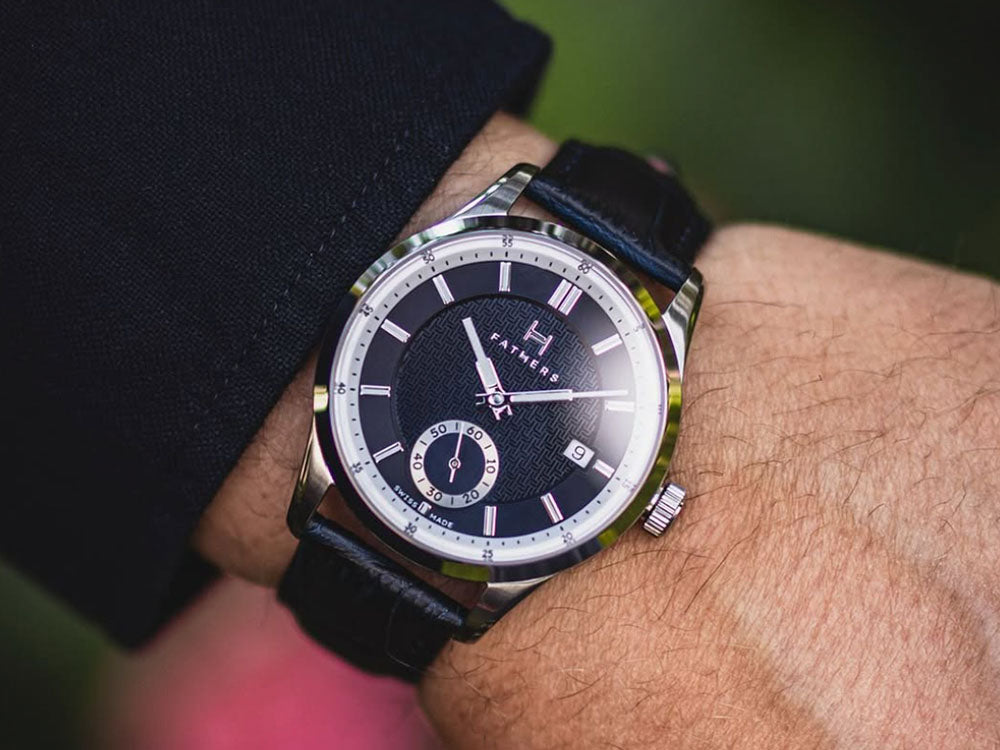
Trends come and go, proportions remain. A restrained case, a legible dial, classic aesthetic codes: these are the choices that, twenty years from now, will not look dated. This is the philosophy of the Small Seconds Always collection: 38 mm in diameter, 316L steel, anti-reflective sapphire crystal and the small seconds at 6 o'clock, a signature of classic watchmaking. The Fathers Nexus, with its midnight-blue dial, and the Aeterna, white and essential, are conceived for exactly this: to be current today and still right tomorrow.
A story worth telling
An inheritance needs a story. The six models in the Small Seconds Always line are limited editions with Latin names that seem written to be explained to a child: Custos, the guardian; Aeterna, eternity; Radix, the root. A watch designed in Naples by an independent microbrand and produced in Switzerland also carries with it the story of those who created it: and stories, unlike objects, never wear out.
How do you preserve a watch meant to last?
An automatic does not ask for much, but it asks for consistency. The essential rules:
- Wear it. An automatic movement is designed to live on the wrist: daily motion keeps it wound and its lubricating oils in working order.
- Have it serviced periodically. Like an engine, a mechanical calibre also needs cleaning and fresh lubrication at regular intervals: it is the service that guarantees accuracy over the long term.
- Check the gaskets if you use it in water. The stated water resistance is maintained only if the gaskets are verified over time.
- Store it well when you are not wearing it. A leather watch case protects it from knocks, dust and humidity, and turns even its keeping into part of the ritual.
- Avoid violent impacts. The mechanics forgive use, drops far less so.
When do you give a watch to be passed down?
There is no wrong moment, but there are perfect ones: turning eighteen, a graduation, the first contract, a wedding, the birth of a child. Father's Day, for a brand called Fathers, is almost a destiny. What counts is that the gift arrives with the right words: a father-and-son watch is not a prize, it is a baton passing from hand to hand. Whoever receives it must know that one day it will be their turn to hand it on again.
A promise that lasts five years (and an idea that lasts longer)
Finally, there is a concrete element that sets apart a watch conceived to be passed down: the one who makes it must believe in it first. Every Fathers watch is covered by The Fathers Promise, a 5-year warranty covering manufacturing defects, movement malfunctions, mechanical regulation problems and assembly defects, and including collection, inspection, servicing and return. In the world of independent watchmaking, five years of coverage is rare: it is a declaration of confidence in what you build.
Behind the warranty lies a precise vision, set down in black and white in the Fathers Manifesto: "We believe in inheritance, not in nostalgia. Inheritance is a seed, not a memory." A watch to pass down does not look to the past: it is planted today, so that someone else may harvest its time tomorrow.
Frequently asked questions
How long can an automatic watch last?
With regular maintenance, a quality automatic watch has no technical expiry date: the mechanical movement can be serviced and repaired indefinitely. This is why there are mechanical watches that have been running for generations, whereas it is far harder for that to happen with electronics.
Which is better as a gift to pass down, an automatic or a quartz?
For a gift meant to last for generations, the automatic is the natural choice: it depends on neither batteries nor electronic components and can always be repaired. Quartz is practical and precise, but it is a service object, not an inheritance.
How often should an automatic watch be serviced?
There is no single rule: it depends on use and conditions. The principle is that of a well-kept vintage car: periodic check-ups at the watchmaker, verification of the gaskets if the watch goes in water, and a full service when accuracy begins to drop.
What makes a good first automatic to give to a child?
A model with a restrained diameter and a classic design, one that can accompany them through every phase of life. The Small Seconds Always collection (38 mm, Swiss Made automatic, sapphire crystal, 100 m water resistance) was created with exactly this spirit, starting from EUR 930.